
All mammals play; it is evolutionary. It is the way we practice the skills that we need to survive and succeed in life. It is how our brain is wired to learn, through real-life experiences and exploration. The saying “play is children’s work” is well known for its truthfulness. Yet, for several years, play has been in decline.
In our society, which promotes productivity above all else, play is often viewed as a frivolous activity, with the sole purpose of simply having fun. For children, the pressure to achieve academically and succeed, as well as the expectation for schools to achieve high test scores, has led to a reduction in play and physical activities, which have been replaced with more structured class time. Isn’t it ironic that research repeatedly shows this is harmful to children? And because we live in a society of constant going, it is easy for us adults to disregard the value of play and prioritize things we consider more important, such as household chores that never seem to end, assignments with deadlines, or errands and bills that need to be paid and completed.
A modern parenting style can also contribute to the decline of play. Intensive parenting is a parenting style characterized by high levels of parental involvement and a focus on achievement-oriented activities, such as sports, music lessons, dance, and other extracurricular pursuits. This is not to say that partaking in these activities is bad, and that children gain nothing from them, because they most certainly do! But to say that, like everything in life, there needs to be a balance.
When children are overly scheduled with no downtime to play (perhaps mixed with a constant feeling of being pressured to excel), this can lead to some mental health problems, such as an increase in stress, anxiety, and depression. If parents are overly involved and constantly intervene to resolve conflicts for their child, the child may also struggle with building resilience, developing independence, and acquiring problem-solving skills. Children can also develop low self-esteem if they do not meet parental expectations. Not to mention the stress, anxiety, and burnout that parents can feel when they are trying to balance several schedules, keep up with life’s responsibilities, and maintain relationships with friends and family.
We also learn best if we are interested in what we are learning about, and that is why free, or unstructured play, is so vital for children. Free play gives children the opportunity to meet their internal desire to observe, engage, create, experiment, and connect with others without worry and fear of failure. Free play rewards the child internally, as opposed to structured activities by adults. Not that all structured activities are bad; sometimes they are necessary to achieve specific goals. However, children need opportunities to pursue their curiosities, and yes, to be children and have fun!
In free play, children have the freedom to decide what they want to do and how they want to do it. It allows them to learn and develop at their own pace, meeting them where they are developmentally. It gives children the space to relax and de-stress (yes, children have stressors, just like adults do), and it builds their confidence. It provides them with the opportunity to practice new skills, take risks, fail, and try again, thereby helping them develop in all areas of child development, including cognitive, physical, language/literacy, and social/emotional.
“All work and no play makes Jack a dull boy” is a popular saying, as play is also vital for us adults. Often, when we carve out leisure time, we are zoned out, watching television or scrolling through social media (I’m guilty too!). Play adds joy to our lives, relieves stress, improves our brain functions, helps us learn new skills, boosts our creativity, and makes us feel more energized. It also allows us to connect with others. Playing and being playful strengthen the relationships we have with our children, partners, and friends.
Children also gain a great deal when we take the time to engage in their play activities. Set up play times and give your children your undivided attention. Turn off the television, put your phone away, and let your child take the lead and direct the play. This shows them just how important they are to you and that you are genuinely interested in what matters to them. If you have multiple children of different ages, consider splitting up the playtimes and involving the older children in playing with the younger ones. They will learn a great deal from each other, and it will strengthen the relationships they have as siblings. During play time, embrace repetition as children learn through repeated activities, and try to match your child’s intensity. If your child is loud and energetic, be loud and lively, too. Take the time to have fun with your kids! You both deserve it!
Different Types of Play
Big names in child development and early childhood education, such as psychologists Jean Piaget and Lev Vygotsky, as well as Sara Smilansky, a professor who researched how children learn through play, discuss different categories or types of play that children participate in and what they gain from them. Defined lines do not bind these categories of play, and you can witness (and be involved in) more than one type of play happening at once. These include:
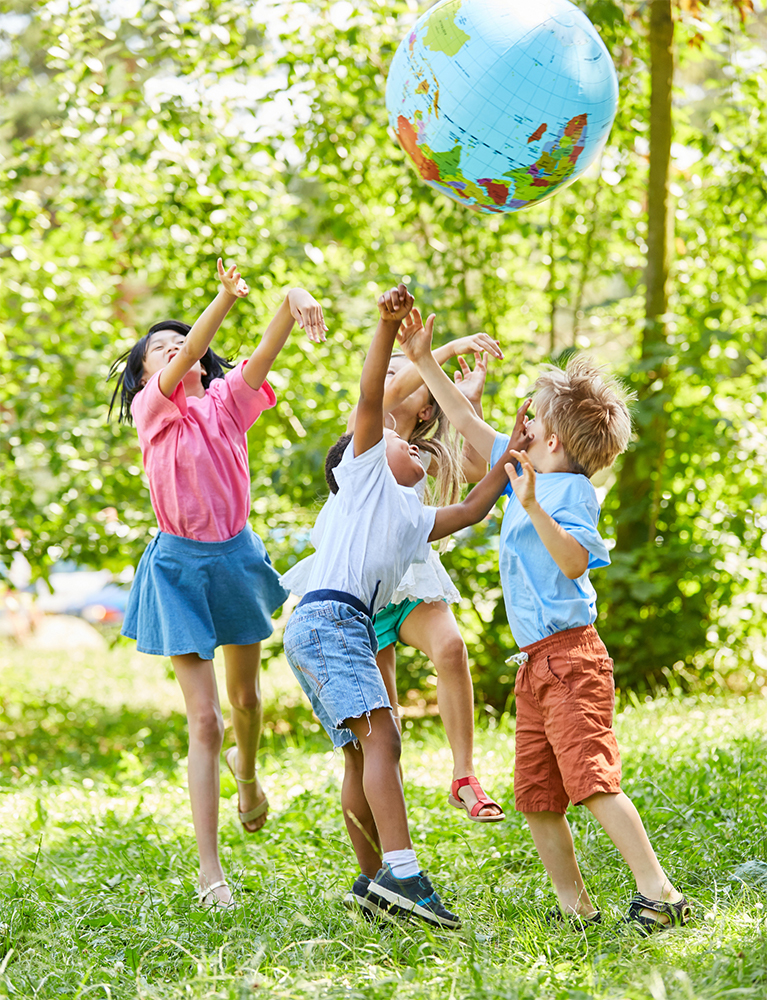
Physical Play: play that develops gross motor skills. These are skills that involve the large muscles in our body, enabling activities such as running, racing, climbing, jumping, throwing, and kicking. This is important for developing balance, coordination, and physical strength.
Language play: occurs when children make different sounds, creating nonsensical words to rhyme or be silly, or when infants coo and babble playfully. This helps children to learn and understand the rules of their native language and to practice their language skills. When parents respond, such as when a baby coos, this creates a serve-and-return interaction, which is also crucial for brain development.
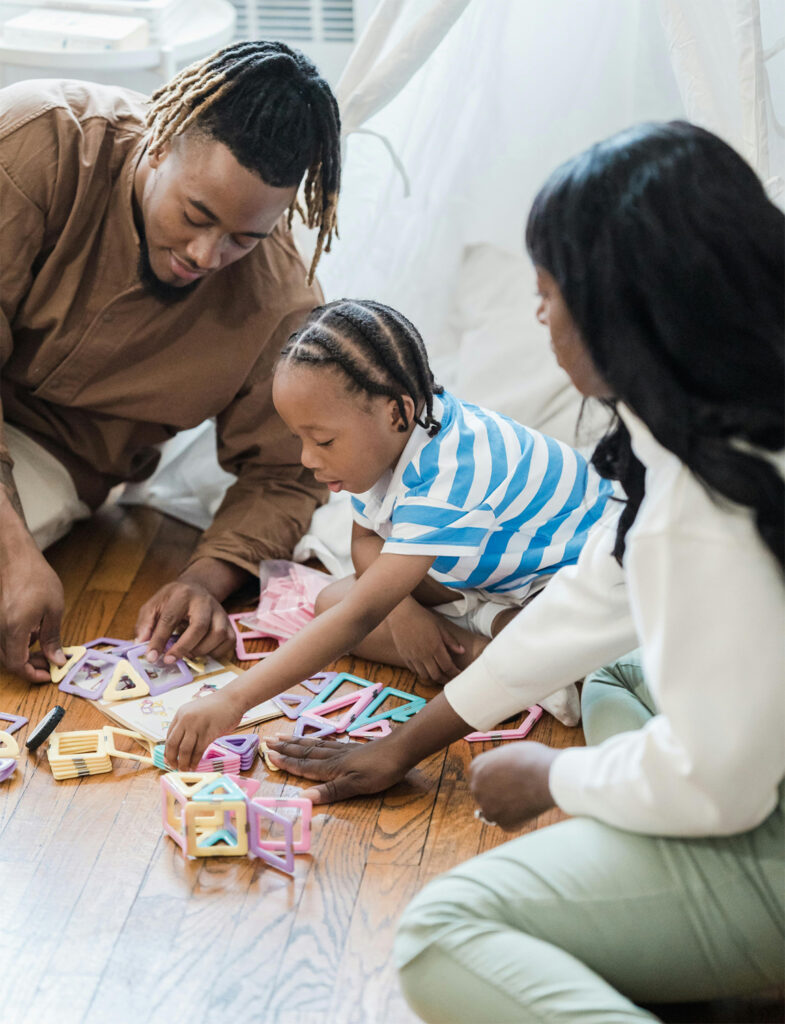
Constructive Play: refers to any activity that involves building and creating—a tower with blocks, a fort with couch cushions. Constructing usually consists of the creation of tools, such as a stick to dig with. Constructive play enables children to be creative, experiment, engage in trial and error, and solve problems.
Creative play: is a way for children to express themselves through singing, dancing, drawing, painting, or playing a musical instrument. Coloring develops fine motor skills and is considered a precursor to writing. Mixing colors develops cognitive skills, and when children create a story about what they drew, they develop literacy and language skills.
Dramatic or Pretend Play: is where children pretend and experiment with different social roles—acting out various themes and ideas, such as playing firefighters, doctors, or parents. This play helps them develop social skills, as they learn to compromise and share roles with other children and work together to solve problems. Pretend play also gives an outlet for children to explore darker themes. Adding elements like monsters or other dangerous components helps children explore emotions such as fear and anxiety in a safe and controlled way. Additionally, engaging in play that involves loss or grief can help children develop resilience to cope with challenging situations in life.
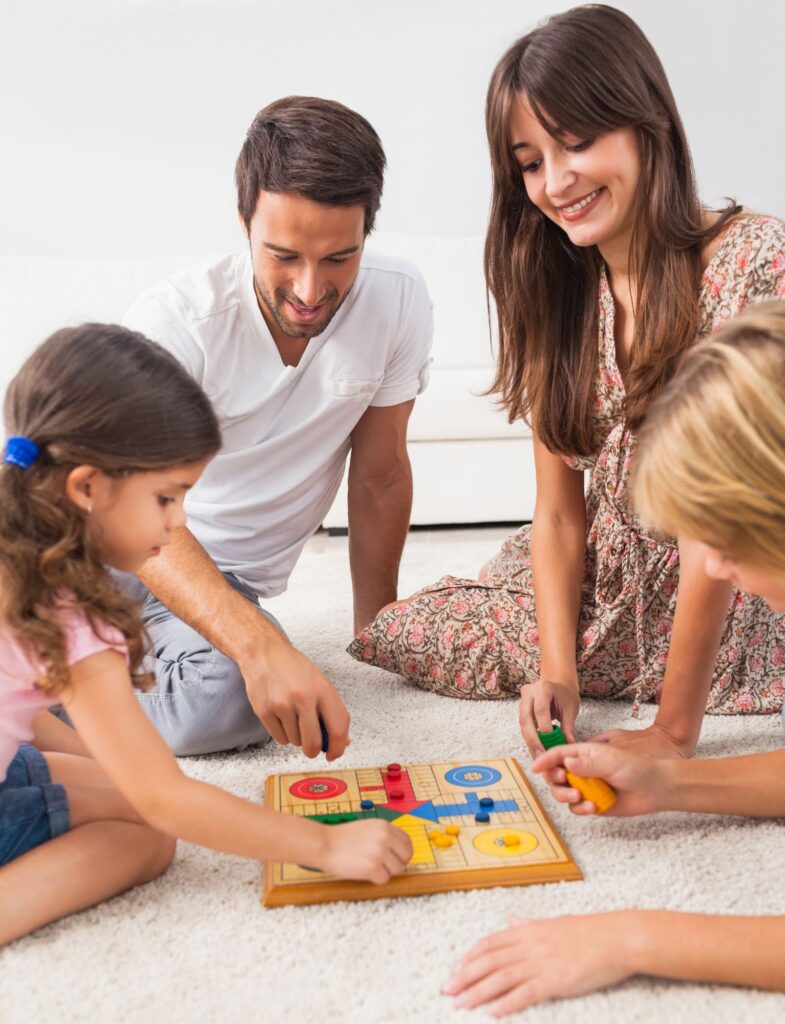
Games with rules: This play is done by older preschool and school-age children. Games with defined rules can be competitive, such as tag, Red Rover, Red Light-Green Light, board and card games, and sports. Being involved in this play helps children learn about rules, teamwork, and how to deal with both wins and losses.
Sensory play: is play that involves the senses. Touch, smell, sight, sound, and taste. This play allows children to learn about the world around them through real-life experiences. It helps build nerve connections to the brain, strengthens fine motor skills (those involving small hand muscles), and can promote cognitive development.
Additionally, these can include activities that focus on movement and balance. These activities engage our proprioceptive and vestibular sensory systems. The vestibular system detects the orientation of our head relative to gravity, and our proprioceptive system involves our muscles and joints, which provide information about our body’s position, movement, and the force of our actions. Spinning, swinging, and rough-and-tumble play are essential for developing these sensory systems.
Play is not just for fun; it is what we need!
Jessica Sparrow – Early Childhood Educator and mom